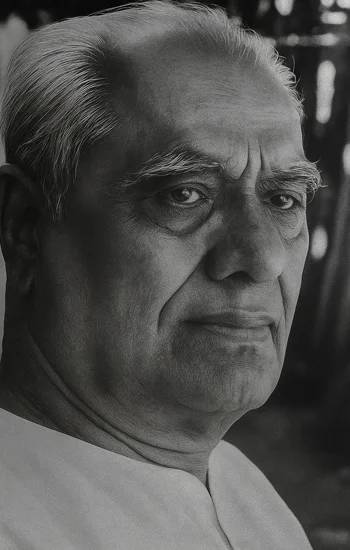
Born: 12 June 1915
Died: 10 April 1998 (aged 82)
Place of birth: Challakere, Chitradurga district, Karnataka, British India
Father: C.S. Krishnamurthy Rao (1891-1988)
Mother: Puttamma (1899-1992)
Wife: Rajamani Nagaraja Rao (1921-2009)
Siblings: C.K. Shankaramnarayana Rao(1920-2011) and wife Jayamma(1928-2006) and C.K. Sadashiva Rao(1923-1979) and wife (Shanta)
Occupation: Writer, Social Activist, stage artist & director
Grand Uncle (Maternal): Dewan Sir M.N. Krishna Rao
Maternal Uncle: Justice Nittoor Srinivasa Rau
Genre: Historical fiction, research
C K Nagaraja Rao - Life and Journey
Chikkaballapura Krishnamurthy Rao Nagaraja Rao (12 June 1915 – 10 April 1998) was an Indian Writer, Freedom Fighter, Dramatist, Stage Artist, Director, Journalist, Film Personality and Social Activist..
He is the first recipient of the Moortidevi Award instituted by Bharatiya Jnanpith for his Magnum Opus "Pattamahadevi Shantaladevi" in 1983. The same Historical Novel of his received "Best Creative Literary Work" Award given by the Karnataka Sahitya Academy in 1978.
C.K Nagaraja Rao (CKN) was born on 12 June 1915 in Challakere, Chitradurga district, Karnataka as the first son of C.S. Krishnamurthy Rao and Puttamma. He spent his childhood across various cities in India, which nurtured in him a deep appreciation for the rich art and cultural heritage of Karnataka. Although he pursued intermediate studies leading towards Engineering, destiny guided him towards a far more diverse and impactful journey. He went on to make remarkable contributions in fields such as the freedom movement, post-independence state reorganisation, literature, theatre, cinema, social activism, the cooperative movement, and cultural development.
From an early age, CKN displayed a keen social consciousness. As a young volunteer, he had the opportunity to serve and interact with Mahatma Gandhi during Gandhi's stay at Nandi Hills near Bengaluru. These interactions, coupled with the influence of his maternal uncle, Justice Nittoor Srinivasa Rau, instilled in him a lifelong commitment to social justice, public service, and the welfare of the underprivileged.
His literary journey began during his school years when a revolutionary short story titled Kaadu Mallige, which addressed caste discrimination through the story of a Dalit music lover, won a prize in a school competition. This early recognition gave him the confidence to pursue writing seriously and marked the beginning of a remarkable literary career.
A turning point in his life came when he joined Satya Shodhana Pustaka Bhandara, a publishing initiative established by Justice Nittoor Srinivasa Rau to promote Kannada literature and provide opportunities for emerging writers. Working in this intellectually vibrant environment brought CKN into close contact with some of Karnataka's finest literary minds. These interactions deepened his appreciation for Kannada literature and strengthened his resolve to contribute meaningfully to the state's cultural heritage.
His growing involvement in literary circles led him to the Kannada Sahitya Parishat, where he later served as both Treasurer and Secretary. During this period, he had the privilege of working alongside literary giants such as Masti Venkatesha Iyengar, B. M. Srikantaiah, D. V. Gundappa, Devudu Narasimha Sastry, K. Gopalakrishna, and several other eminent scholars and writers. Their influence further enriched his literary vision and inspired him to explore Karnataka's history, culture, and traditions through literature.
While literature occupied a central place in his life, CKN's creative pursuits extended far beyond writing. Theatre became his second passion. Beginning as an actor, he evolved into a director, organizer, make-up artist, costume designer, and mentor. In 1936, he founded The United Artists, a theatre troupe dedicated to experimental productions and the promotion of new talent. Over the next four decades, he acted in more than 100 plays, portrayed over 120 characters, directed 75 productions, and became one of the most respected figures in Kannada theatre.
His contributions to theatre were multidimensional. He pioneered innovative stagecraft, realistic make-up techniques, thoughtful costume design, and experimental direction. His productions won acclaim across Karnataka, while his work with organizations such as Kannada Sahitya Parishat, the Bangalore Amateur Dramatic Association, and Ranga Mantapa helped nurture future generations of theatre artists.
His passion for storytelling naturally drew him towards cinema. In the 1930s, he travelled to Bombay with aspirations of entering the film industry. Although his initial experiences were challenging, he continued his association with cinema throughout his life. He contributed stories, screenplays, dialogues, lyrics, and direction to several projects.
One of his notable achievements was the production of the Kannada film Daivaleele in the early 1960s under his banner Bioscope. He also wrote dialogues for the acclaimed Kannada film Gouri and played a pioneering role in introducing the works of renowned Kannada poets into mainstream cinema. Through his efforts, poems by Kuvempu and K. S. Narasimhaswamy were incorporated into film music, setting a precedent that would later become a respected tradition in Kannada cinema.
His passion for cinema continued through his ambitious but unfinished film project on Akkamahadevi and later through his role in establishing and nurturing the Aadarsha Film Institute, where he spent nearly five years training aspiring actors, directors, technicians, and film professionals.
Even while pursuing literature, theatre, and cinema, CKN's intellectual curiosity increasingly drew him towards historical research. In 1958, he was commissioned by the Education Department to write a novel on the celebrated sculptor Jakanachari. While researching the subject, he became fascinated by the life of Hoysala Queen Shantala Devi. What began as background research gradually evolved into a lifelong scholarly pursuit.
Over the next several years, CKN undertook extensive research into Hoysala history, examining inscriptions, historical records, and literary sources. His findings challenged long-held misconceptions regarding Queen Shantala Devi, particularly the belief that she was childless and had ended her life tragically. Through meticulous documentation, he demonstrated that she was the mother of three sons and a daughter and that the honours bestowed upon her were fully deserved.
His landmark research paper, Children of Vishnuvardhana, received widespread recognition when presented at a scholarly seminar and was subsequently published in the journal of the Mythic Society.
Building upon nearly eight years of research, CKN began writing what would become his magnum opus, Pattamahadevi Shanthaladevi, in 1968. The monumental work, spanning 2,142 pages, was completed in 1976 after another eight years of dedicated writing. The original Jakanachari novel he had planned eventually became an integral part of this larger historical masterpiece.
His historical investigations extended beyond the Hoysalas to include the Chalukyas and several other important dynasties of India. He also conducted valuable research into the life and period of the poet Mahakavi Lakshmeesha and studied the historical significance of the Saviyabbe Veeragallu inscription.
By the time CKN completed sixty years of age in 1975, he had already established himself as a respected literary figure across South India. His sixtieth birthday was celebrated with great enthusiasm in Hyderabad by the literary organization Vishwa Sahiti, led by his close friend Pothukuchi Sambashiva Rao. The event was attended by leading literary personalities, ministers, jurists, and public figures, making it a memorable public celebration of his contributions to literature and culture. Similar celebrations were held in Bengaluru, where his aged parents had the joy of witnessing their son's achievements firsthand.
His father, C.S. Krishnamurthy Rao, a spiritually inclined writer, lived to the age of ninety-seven and passed away in December 1987. His mother, Puttamma, who enjoyed a rich and fulfilling family life, passed away in April 1992 at the age of ninety-three.
Throughout his life, CKN remained a man of unwavering principles, discipline, and integrity. Whether as a writer, researcher, publisher, theatre artist, filmmaker, teacher, or cultural activist, he approached every endeavour with sincerity and dedication. Personal gain never motivated him; instead, he consistently sought ways to contribute to society, support fellow artists, and preserve Karnataka's cultural heritage.
Those who knew him remember him not only for his remarkable accomplishments but also for the values by which he lived. He was a highly principled, disciplined, and ethical individual whose conduct served as an example for others to emulate. Humility, honesty, selflessness, and a deep sense of responsibility guided both his personal and professional life. These values became an enduring legacy, embraced and carried forward by his children and grandchildren.
What truly distinguished C.K. Nagaraja Rao was not merely the breadth of his achievements, but the depth of his character and commitment to every field he embraced. He lived a life guided by purpose, intellectual curiosity, cultural pride, and service to others. Rare are individuals who leave an impact across so many spheres while remaining firmly grounded in their principles.
CKN was not simply a writer, historian, theatre personality, or filmmaker. He was a cultural institution in himself—a visionary whose life bridged literature, history, performing arts, and social responsibility. His contributions continue to inspire generations, and his legacy remains a shining example of a life lived with purpose, conviction, and grace.
Pioneering Achievements and Distinctions - A Man of Many Firsts
Throughout his multifaceted career, C.K. Nagaraja Rao established several notable milestones across literature, theatre, journalism, cinema, and cultural institutions. Many of his initiatives were pioneering in nature and left a lasting impact on Kannada cultural and artistic history.
Theatre
Organising Kannada Theatre in Mumbai (1959)
Under CKN's leadership, The United Artists, one of Karnataka's pioneering amateur theatre groups, organized a major Kannada Drama Festival in Mumbai in 1959. A commemorative souvenir released on the occasion documented the evolution of Indian theatre, with special emphasis on the growth and contribution of Kannada theatre. Today, it remains a valuable historical record for theatre scholars and researchers.
Cinema
Producer of a Landmark Kannada Social Film (1962)
CKN produced Daivaleele in 1962 under his production banner Bioscope. The film is recognised as the first Kannada social film built around a double-role concept, making it a significant milestone in the evolution of Kannada cinema.
Pioneering Innovations through Akkamahadevi (1967–68)
Although the film Akkamahadevi remained incomplete, the project achieved several noteworthy distinctions in Kannada cinema:
- Among the first Kannada productions to record songs in Bengaluru using local musicians at the Government S.J. Polytechnic Sound Studios.
- Featured four-track song recordings at the prestigious Rajkamal Kalamandir Studios of V. Shantaram in Bombay.
- Secured a loan of ₹1.75 lakh from the Film Finance Corporation, with the Government of Mysore standing guarantee for the project.
- Received a special subsidy of ₹10,000 from the Government of Mysore under the chief ministership of S. Nijalingappa, a rare recognition for a film project of that period.
Literature and Research
First Recipient of the Moortidevi Award
CKN had the distinction of being the first recipient of the prestigious Moortidevi Award instituted by the Bharatiya Jnanpith, one of India's foremost literary organizations. The honour recognized his outstanding contribution to Indian literature and historical research.
First Literary Work in India to Receive Bank-Financed Purchase Support
Pattamahadevi Shanthaladevi became one of the first books for which readers could obtain a loan from Canara Bank to facilitate its purchase, underscoring the book's extraordinary scale, significance, and public interest.
Film Education
Founder Vice-Principal of Adarsha Film Institute
Recognising the need for structured training in cinema and allied arts, CKN served as the Founder Vice-Principal of the Adarsha Film Institute, where he played a pivotal role in shaping and mentoring a new generation of actors, directors, technicians, and film professionals.
Journalism
Correspondent of Sudharma
CKN was associated from its inception with Sudharma, the world's only Sanskrit daily newspaper. He served as its correspondent and contributed to its unique mission of promoting Sanskrit journalism and preserving India's classical linguistic heritage.
Institution Building and Public Service
Founder Member of Rotary Club, Bangalore Jayanagar
Committed to community service and civic engagement, CKN was among the founder members of the Rotary Club of Bangalore Jayanagar, contributing to its early growth and activities.
Founder Member of Karnataka Film Producers Guild
CKN was also a founder member of the Karnataka Film Producers Guild, an organization established to strengthen and promote the Kannada film industry and create a more supportive ecosystem for film production in Karnataka.
These achievements reflect CKN's pioneering spirit and his remarkable ability to contribute meaningfully across diverse fields. Whether in literature, theatre, cinema, journalism, education, or public service, he consistently sought to create institutions, introduce new ideas, and open pathways for future generations.