Rajamani Nagaraja Rao: A Life of Music, Literature and Grace
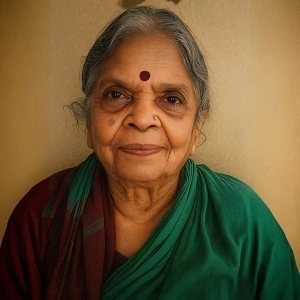
Born: 28 June 1921
Died: 19 July 2009 (aged 88)
Father and Mother: B.L. Narasimha Sastry and Rukminamma
Siblings: Brother M.N. Krishna and wife Dinamani Krishna
Behind every great literary and cultural figure stands a source of unwavering support, understanding, and inspiration. For C.K. Nagaraja Rao (CKN), that person was his wife, Rajamani Nagaraja Rao. More than a devoted life partner, she was a musician, teacher, writer, cultural ambassador, and a woman of remarkable strength and refinement whose contributions enriched both her family and the wider cultural landscape of Karnataka.
Family Background and Early Life
Rajamani was the eldest child of B.L. Narasimha Sastry (BLNS) and Rukminamma. Her father was pious by nature, scholarly and a renowned astrologer.
While Rajamani's mother was from Mysore and her father’s family belonged to Bidare of Tumakuru District. The family deity is Lakshmi Narasimha. The family however lived in Nanjanagud, Mysore and Channapatna and wherever they lived, the family traditions were thoroughly followed in their daily life.
Rajamani's father BLNS had also established his office, Chaitanya Jyotishya Mandira in Chowdeshwari Temple Street, Bengaluru. His Son in-law CKN learnt Astrology from his Father In-law and CKN used the knowledge he gained on Astrology purely for his Historical Research work.
Rajamani's mother, Rukminamma was not only excellent in cooking, she was also admired by everyone for her generosity, warmth, and exceptional kind nature she possessed. Her culinary skills always got exhibited whenever she prepared traditional food or snacks with remarkable perfection. She was very fondly loved by all her grandchildren.
Rajamani's parents actually named her as Lakshminarasamma, but her mother affectionately called her daughter by pet name “Rajamani." The pet name gradually became her identity. Over time, family members, friends, and well-wishers came to know her almost exclusively by this pet name, which became her real name.
Rajamani was the eldest child and also the darling of the household. Rajamani grew up in an environment that valued learning, music, culture and tradition. The life's values she learnt influenced her very much playing a very significant role in shaping her personality as also allowing her to nurture her lifelong love for tradition, art forms and literature.
Rajamani's father Narasimha Sastry was influenced by his cousin Nanjunda Sastry to become an Astrologer. Rajamani's interest to read literary books started during her visits to her uncle Nanjunda Sastry’s place and spending lot of her time at the good library of books maintained by him. Reading variety of books enlarged her knowledge that in fact made her to attempt writing an essay on “Women’s Education” which won her the first prize when she was in Lower Secondary (8th standard) and that interest continued throughout her life.
Her father's younger brother was Professor M. Ramaswamy. He was a Gold Medalist when he obtained a Master’s Degree in Mathematics. He was a Professor of Mathematics in Yuvaraja College in Mysore.
Rajamani’s only brother, M.N. Krishna was a highly accomplished person holding Five Degrees. He obtained Science degree from Mysore University and later obtained a Bachelor’s degree in Law as well. As he lost his father at a very early age, he became a responsible son taking good care of his mother. He worked as a High School teacher at a Government School in Magadi and later on worked at Davanagere. As part of his dream to realise being a Chartered Accountant, he articled at Hariharan Company at Mumbai (Bombay).
His hunger for learning continued even after his marriage. He worked for SRMS, a transport company and later joined Indian Telephone Industries (I.T.I) Ltd. as an accountant and continued his studies. His ambition of becoming a Chartered Accountant and also to become a Cost Accountant was ably supported by his wife Dinamani. For all his successes in his life, his wife Dinamani stood behind him not only taking all the responsibilities of caring and managing the family, but also worked. He was successful in completing simultaneously both the courses to become a Chartered Accountant and a Cost Accountant.
He joined the newly formed State Owned Public Sector Industry, New Government Electric Factory (NGEF) where he rose to the position of Controller of Finance. He was sent on deputation to serve in another Government of Karnataka Enterprise, The Mysore Electrical Industries Ltd., as Financial Advisor and Chief Accounts Officer till his retirement. Post retirement, he established his own company, ‘M.N. Krishna and Company’ and served as a Financial Consultant for many corporates and individuals.
It's creditable that M N Krishna served as the Chairman of the Institute of Chartered Accountants of India, Bangalore Chapter as also for the Cost Accountants Chapter at Bangalore. He was instrumental in holding the very first CA conference at Bangalore.
Marriage to C.K. Nagaraja Rao
While Rajamani was living with her parents in Channapatna, CKN's father became acquainted with BLNS in 1934, and the two developed a close friendship. During one of their conversations about family and day-to-day matters, CKN's father proposed a matrimonial alliance, suggesting that CKN marry BLNS's daughter.
BLNS made a special visit to Bangalore with his daughter, Rajamani. The meeting was arranged at the residence of CKN's maternal uncle, Nittoor Srinivasa Rau. Also present was Nittoor's close friend, Siddalingappa, whose opinion was greatly respected by the family.
During the meeting, CKN had the opportunity not only to see Rajamani but also to hear her sing. Her voice was exceptionally melodious and graceful, leaving a deep impression on everyone present.
After Rajamani and her father had departed, Siddalingappa turned to CKN and remarked, "The girl is beautiful, and she sings wonderfully. You should marry her." The endorsement carried special significance because it came from Siddalingappa, whose judgment CKN held in high regard.
CKN's mother also expressed her wholehearted approval, saying, "I like the girl. What do you think?" By then, CKN had already made up his mind. Rajamani's charm, gentle demeanor, and above all, her captivating singing had won his heart. He readily consented to the marriage and, convinced that he had found the right life partner, chose not to insist on horoscope matching.
Although several relatives encouraged CKN to seek a match from a wealthier family, he remained steadfast in his decision. For him, the choice was never influenced by wealth or social standing. He was deeply impressed by Rajamani's grace, noble character, and exceptional musical talent—qualities that he valued far above material prosperity. Convinced that these virtues formed the true foundation of a happy and enduring marriage, CKN chose Rajamani as his life partner.
Their marriage marked the beginning of a lifelong partnership built on mutual respect, unwavering trust, shared interests, and deeply rooted cultural values. It was far more than a matrimonial union; it blossomed into an enduring intellectual, artistic, and spiritual companionship that enriched their lives for over six and a half decades.
A Lifelong Pursuit of Music
Music occupied a central place in Rajamani's life. Having learnt the Veena during her childhood, she continued her musical education after marriage with the encouragement of CKN.
Recognizing her talent and passion, CKN ensured that she received advanced training under Karnataka's renowned Veena maestro Vidwan L. Raja Rao. Under his guidance, she acquired considerable proficiency in Carnatic classical music and became an accomplished Veena artist. Although she never appeared for formal music examinations—a decision influenced by her Guru's belief that learning should be pursued for knowledge and not merely for certification—she later realized the practical importance of qualifications when she herself became a teacher.
Consequently, she encouraged her own students not only to learn music but also to obtain formal certification.
Rajamani trained numerous students in Veena and classical music and actively promoted Karnataka's musical traditions by organizing Tyagaraja Aradhana and Purandaradasa Jayanthi celebrations at home every year. Her expertise and dedication earned her recognition within Karnataka's music circles, leading to her service as a member and later Chairperson of the Karnataka Music Examination Committee.
Pioneer in Gamaka Tradition
One of Rajamani's most significant cultural contributions was in the field of Gamaka Vachana, the traditional art of rendering classical Kannada poetry through melodic narration.
As a passionate lover of literature, CKN believed that the treasures of classical Kannada poetry should reach common people through music. He encouraged Rajamani to learn and master this art form. Inspired by his vision, she undertook a serious study of classical Kannada literature and became one of the earliest disciples of the celebrated Gamaki Bharata Bindu Rao, one of Karnataka's foremost exponents of Gamaka.
Rajamani immersed herself in the study of classical works by poets such as Ranna and Pampa. She not only memorized lengthy passages but also experimented with multiple ragas to bring out the emotional depth of each verse. Often, she and CKN would spend hours discussing and selecting the most appropriate musical interpretation for a composition.
Her performances brought ancient Kannada literature alive for audiences across Karnataka. She presented Gamaka programmes at Kannada Sahitya Parishat and in several towns including Hassan, Shivamogga, Ballari, and Shikaripura. Before her performances, CKN would often explain the literary context and meaning of the verses, creating a unique blend of scholarship and music.
Beyond performing, she trained many students in the art of Gamaka and served as an examiner and judge for Gamaka competitions and examinations conducted by Kannada Sahitya Parishat. Through her efforts, classical Kannada literature reached countless listeners and continued to thrive among newer generations.
Literary Interests and Creative Pursuits
Rajamani's intellectual curiosity extended beyond music. Inspired by CKN's passion for languages and literature, she learnt Hindi and successfully completed the Rashtrabhasha examinations.
Her exposure to Hindi literature motivated her to translate selected Hindi stories into Kannada. She also began writing independently, producing essays, short stories, and novels.
Among her literary works are:
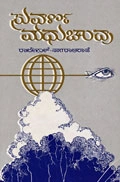
Suvarna Madhuchandra (Golden Honeymoon) – Travelogue
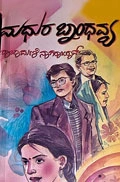
Madhura Bandhavya – Novel
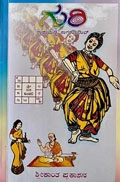
Guri – Novel
Anireekshita (Unexpected) – Unpublished novel
She also wrote essays on contemporary social issues, reflecting her keen observation of society and thoughtful engagement with changing times.
Author of a Celebrated Travelogue
Rajamani's first published book, Suvarna Madhuchandra (Golden Honeymoon), appeared in 1988. The travelogue recounts the experiences of her and CKN's extensive tour of Europe, Canada, and the United States in 1984, coinciding with their Golden Wedding Anniversary.
Written with warmth, sensitivity, and keen observation, the book offers vivid descriptions of foreign lands while also providing valuable insights into CKN's life, personality, and literary pursuits.
Enriched by discussions and suggestions from CKN, the travelogue became both a record of travel and a reflection of their shared intellectual journey. The book received appreciation from readers, including seasoned travellers, who admired its detailed observations, cultural insights, and picturesque descriptions of places across Europe and North America.
A Silent Force Behind CKN's Success
Throughout CKN's literary, theatrical, research, and cultural journey, Rajamani remained his steadfast companion and strongest pillar of support.
She actively assisted him in preparing manuscripts, copying drafts, organizing literary activities, and managing numerous responsibilities behind the scenes.
More importantly, she created a stable and harmonious home environment that enabled CKN to devote himself fully to literature, theatre, cinema, research, and public life. Despite the uncertainties that often accompanied a life dedicated to the arts and letters, she never complained about financial difficulties or professional setbacks. With remarkable patience, resilience, and resourcefulness, she managed the household and supported every one of her husband's aspirations.
A Lifelong Learner
Rajamani's passion for learning remained undiminished throughout her life. Even after crossing middle age, she pursued higher education by enrolling privately for a Master's degree in Kannada from Mysore University.
Although she eventually chose not to appear for the final examination because she felt she had not prepared sufficiently, her determination to continue learning reflected the intellectual curiosity that defined her character.
An Ideal Partnership
The marriage of Rajamani and C.K. Nagaraja Rao stands as a shining example of mutual trust, respect, and companionship.
CKN not only encouraged his wife's interests but actively nurtured her talents in music, literature, and cultural activities. Likewise, Rajamani stood beside him through every phase of his journey, sharing his dreams, challenges, and achievements. Their home was constantly filled with music, literature, scholarship, and meaningful cultural engagement.
Together they created an environment that fostered creativity, learning, and values—not only for themselves but also for their children and future generations.
Whether CKN had a stable income or faced financial uncertainty, Rajamani remained unwavering in her support. She never measured life in material terms but found fulfillment in shared values, cultural pursuits, and family harmony. Their relationship was built on understanding, trust, and a deep appreciation of each other's strengths.
Legacy
Rajamani Nagaraja Rao was far more than the wife of a distinguished literary figure. She was a gifted musician, teacher, writer, cultural enthusiast, and lifelong learner who made significant contributions in her own right.
Through her work in Veena, Gamaka, literature, teaching, and cultural preservation, she helped promote Karnataka's artistic and literary traditions. Through her unwavering support, she also played an indispensable role in enabling CKN to pursue his extraordinary literary and cultural mission.
Her life remains an inspiring example of quiet accomplishment, cultural commitment, intellectual curiosity, and grace. She demonstrated that influence need not always be loud or visible; sometimes it is found in the steady dedication, encouragement, and values that enrich the lives of others and leave a lasting legacy for generations to come.