- Home
- About
- His Works
- Awards and Honours
- Gallery
- Press Clippings
- Testimonials
Testimonials
Souvenir Magazine (1985): Celebrating C.K. Nagaraja Rao's 70th Birthday
The Souvenir Magazine (1985) contains articles by friends and well-wishers of C.K. Nagaraja Rao, released for his 70th Birthday Anniversary.
GULABDAS BROKER
Gujarati writer"Gulabdas Broker regards C.K. Nagaraja Rao as a Reminiscence."
I am very happy to learn that friends, admirers and literary circles of Karnataka are going to felicitate Shri C.K. Nagaraja Rao in a public program in 1986 to record his completion of seventy years on 12-6-1985. I am sure the celebrations will meet with a great success.
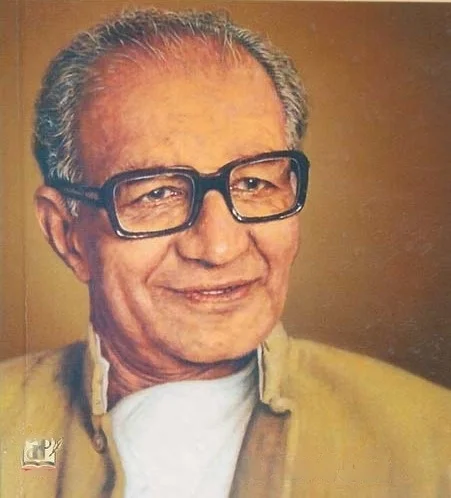
I have remained a close friend of Shri C.K. Nagaraja Rao for more than thirty years now. I had met him here in Bombay at P.E.N (Playwrights, Essayists and Novelists) meetings some times, but it was in 1952 when I had gone to Bangalore and stayed there for about a month and a half that our acquaintance turned into friendship. That friendship has lasted through all these years.
I found since then that Shri Nagaraja Rao is a very affectionate and knowledgeable man. We used to sit together for hours and discuss about life, literature and the world in general. It was many years after that he produced his masterpiece ‘Pattamahadevi Shantaladevi’, but I felt in those days that he had also many such novels in his consciousness.
Now, whenever I remember Bangalore, Masti Venkatesha Iyengar, V. Sitaramayya, V. Ashvatta Narayana Rao and C.K. Nagaraja Rao, invariably come to my mind.
There are many memories of my friendship with C.K. Nagaraja Rao. I remember one of them very vividly. It is about a funny incident he had narrated to me when I had gone to have lunch at his place in those days. He told me then that once the great Hindi novelist Premchand had gone to his place to have lunch with him. And the funny part was that C.K. Nagaraja Rao thought he knew Hindi a little bit. But actually speaking he did not perhaps know what that little was very little.
So, when all were seated and lunch was served, Nagaraja Rao very respectfully said in Hindi “Bhaiteeye”. The guest smiled but did not do anything. The host requested again, and again but the guest did not move. When he repeated the request a third time, Premchandji smiled back and said, "Bhai, we are already sitting. Now tell us as to what we have to do next”. There was a roar of laughter when Nagaraja Rao discovered his mistake. If I remember alright the mistake lay in the fact that in Kannada the word for “Please be seated” and “Please begin”, means the same. So our friend thought it must be the same in Hindi too. Such things happen when you do not know a language enough; but if you have your heart full of affection to compensate for it, only the affection remains and the gaffe is forgotten in a burst of laughter.
And C.K. Nagaraja Rao has affection enough in that big heart of his. It is because of that he has been able to make and keep friends all over India. One needs to read the names of the office bearers of the Celebrations Committee to know how widely spread his circle of friendship is and how illustrious!
While talking about C.K. Nagaraja Rao I cannot talk about his literary achievement, because I do not know the beautiful Kannada language, but the very fact the distinguished Bharatiya Jnanapith has honoured him by bestowing the Moorthidevi Sahitya Puraskar on him for his famous novel, proves his merit as a literary artist.
Few of our writers have ventured into the realm of films. C.K. Nagaraja Rao has done so. It is enough of an adventure for a man of his means. We all knew that another Kannada man, Girish Karnad, is very famous in that medium, but to have ventured into it also speaks very much for the courage and spirit of adventure of our friend has.
I wish him a very long and fruitful life of creation and study. I wish that the remaining part of his life be as illustrious and fruitful as the part that has already crowning him with glory.
(Shri Gulabdas Broker is a well known Gujarati writer from Ahmadabdad)
SATYENDRA NARAYAN
Former Vice Chancellor of Bhagalpur University & Dy. Speaker of Bihar Legislative Council"Satyendra Narayan refers to C.K. Nagaraja Rao as a Good friend."
In October 1945 the PEN CLUB under the leadership of Smt. Sophia Wadia organized writer’s conference at Jaipur. The generous Maharaja of Jaipur was the host and one of the great Administrator that India has produced. Sir Mirza Ismail was the DEWAN and the moving spirit behind the conference. It was my first experience of meeting the cream of Indian Literary scene. Mahesh and I were vegetarians and so we were put up in city of tents where the vegetarians had been put up. I met a lot of Kannadigas and some Marathis. The doyen of Kannada writers, Masti was there and so were Prof. V. Seetharamayya, Shivaram Karantha, S.S. Malwad and C.K. Nagaraja Rao.
For 3 days we were together and met each other and talked. Nagaraja Rao, for reasons that I cannot explain even today, attracted me and we kept up correspondence. I went to Bangalore with my wife in January 1954 and called on C.K.N. Till then or rather till about 2 years back I had read nothing written by C.K.N. as I do not read Kannada and he had not sent me anything in Hindi or English, the two languages that I can read. And so did not know how great writer he is.
After the Jaipur conference there had been other conferences at Varanasi, Lucknow and other places where we met each other. I had considered myself a friend of C.K.N who also thought me to be one. And then I failed him.
In 1965 I was invited by the American Government to visit the country and I was also visiting West Germany on invitation by the West German Government on my way to U.S.A. C.K.N. wrote to me to meet a gentleman near Bonn on urgent business. His need was really very great. In Bonn I found that I had engagements arranged for me from morning till late in the evening. I was also keen to meet as many people as I could, and so did not find time to meet the person C.K.N. had wanted me to. Perhaps by cancelling a dinner or some other engagement I could have managed to see the gentleman but I did not and I wrote to C.K.N. of my inability.
C.K.N. must have become hopping mad at me as he was fully justified. C.K.N. just withdrew in his shell and returned one or two of my letters marked ‘Addressee not known’. But he has one great and very rare quality that he can forgive. After quite a few years I received an invitation from C.K.N. to the marriage of a child of his and I learned that I have been forgiven. Forgiving an enemy is easy, forgiving an acquaintance is slightly less easy, but forgiven a friend is a very rare quality. And C.K.N. has it in ample measure. May he be a 100 and NOT OUT.
(Shri Satyendra Narayan is the former Vice Chancellor of Bhagalpur University and former Dy. Speaker of Bihar Legislative Council)
Pothukuchi Sambashiva Rao–
writer and literary personality"Pothukuchi Sambashiva Rao's Perspective: Nagaraja Rao as I Know Him"
It is a rare privilege that a prominent writer could reach his Seventies and the whole Nation should rise up to honour him, for the literary eminence. And that way Sri. C.K. Nagaraja Rao is very fortunate to be showered upon the affections of his State. A galaxy of top personalities joined hands to celebrate his 70th Birth Anniversary.Long Long back I had the pleasure of meeting Mr. Nagaraja Rao at a PEN conference in the North, through the goodwill of my friend Mr. Veldanda Prabhakara Rao. But for his initiative in those days, I could not dare to attend the intellectual meets as the P.E.N Conferences. Since then our friendship grew intensively and we have come closer. Exchanges, visits and correspondences developed. Mr. Nagaraja Rao has always been very cordial, friendly and very helpful.
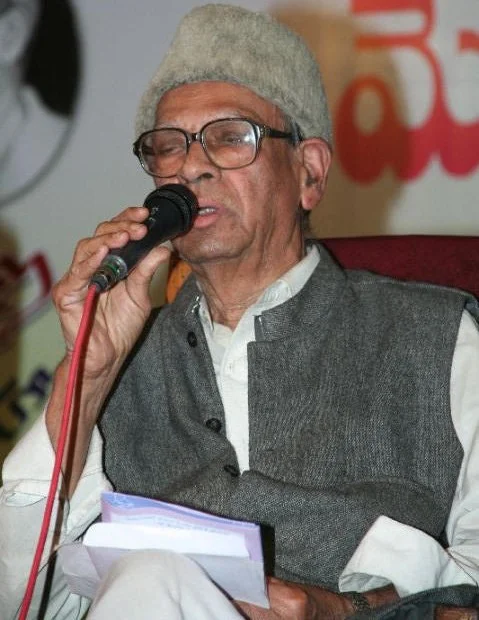
His fund of knowledge in Kannada Literature and his Public Relations with Kannada Writers are astounding. Some of the papers read by him at P.E.N Conference on Kannada Literature gave me deep insight to know about Kannada more and more. My appreciation and affection for him developed still further when I observed his impartial attitude to be above groups and schools of thought.
Mr Nagaraja Rao contributed articles to Unilit Magazine, and English Quarterly edited by me and they received international appreciation. He was invited to attend the All India Telugu Writers Conferences both at Hyderabad and later in 1981 at Vizag. He joined the South Indian seminars and added glamour to the conferences.
Shashti Poorthi in anybody’s life is a rare event. Apart from the celebrations done for him at Bangalore, our organization Vishwa Sahithi arranged a grand Function at Hyderabad at Ravindra Bharathi to felicitate NagarajaRao on his Shashti Poorthi. Elite of the Twin Cities joined the Function to convey the regards and respect of Telugu race for Mr. Nagaraja Rao. I had the pleasure of glancing at the manuscript when ‘Pattamahadevi Shantaladevi” was under preparation and I had great hopes that it would be a magnificent work in Kannada Literature. Accordingly, I am very much delighted when Mr. Nagaraja Rao was awarded a Prize by Jnanapith. It is a great novel not only in size but also in treatment of theme and presentation of characters. This award of Moorti Devi Sahitya Puraskar first time showered on Shri C.K. Nagaraja Rao and it is acclaimed as a best creative literary work published in Kannada during 1978.
In 1974, I was able to organize successfully the Sixth All India Telugu Writers Conference at Bangalore at Ravindra Kalakshetra. The credit for its success mostly goes to Mr. C.K. Nagaraja Rao as he stood by me consistently from the beginning of its thought, organization and conclusion. With the assistance of Sri. K.H. Ranganath, the then Transport Minister, Karnataka, C.K. Nagaraja Rao almost bore the brunt of the whole conference and helped me when many Telugus at Bangalore could not cooperate in Organization. Ultimately the academies of both the Andhra Pradesh and Karnataka States joined to give the conference a great filling and make it a success. Hence C.K. Nagaraja Rao has secured a great place and corner of love in the hearts among Telugu writers.
Age of Seventy is not a small span in human life but how fruitfully it was steered matters most. That way Mr. C.K. Nagaraja Rao has seen a multi-faced activity in his life including politics, literature, films, and social services. His smile and forbearance of all that faces him are the secrets of success of his career. This Celebration must be only a pat on his shoulder to make him more and lead a more dynamic literary career. All my love goes to C.K. Nagaraja Rao on this happy occasion.
(Shri. Pothukuchi is a well known writer and literary personality in Telugu. He is the editor of Vishwa Bharati and Unilit Magazines)
M.V. KRISHNA MURTHY
Industrialist, Management expert, Former President of Federation of Karnataka Chamber of Commerce and Industry""M.V. Krishna Murthy characterizes C.K. Nagaraja Rao as a "splendorous (vyvidhyamaya) personality."
Today, everyone joins in chorus to recognize C.K.N. because, no less than the Bharatiya Jnanapith has recognized him, R.K. Narayan was recognized in India, only after the Michigan University held him high. That generally is the ethos of our community development.But our Society of Technical and Management Education, blessed by its inauguration on October 10, 1963 by the then President of India, Dr. Sarvapalli Radhakrishnan, recognized C.K. Nagaraja Rao and honored him at the Kannada Sahitya Parishat on August 21, 1972 presided by the then Education Minister Sri. A.R. Badrinarayan.I have had the privilege of knowing him ever since he became the president of the Kannada Lekhakara Sangha (Karnataka Writers Association) and myself becoming the Vice President.
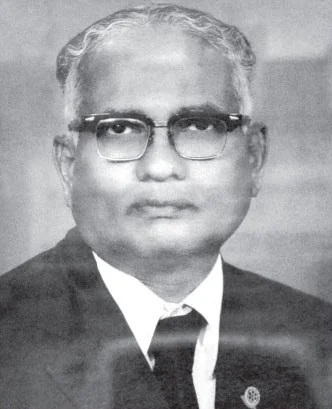
I have had the privilege of knowing him ever since he became the president of the Kannada Lekhakara Sangha (Karnataka Writers Association) and myself becoming the Vice President. Every year, elections would take place, all members would propose me as its Vice President and I in turn, propose him to be the President of the Association and he would reluctantly accept. Kannada is such a language, quite often, we cannot get matching words for Vyvidhyamaya - for example: so the word ‘SPLENDOUROUS’ is used for C.K.N.
We were also associated in the All India PEN and have travelled together to Lucknow for the Conference, have jointly organized several P.E.N. Conferences in Bangalore and found CKN a person with indomitable courage of conviction, fearless in his basic approach, humanist and more than all, a versatile artist of multi-dimensional approach.
Having seen him in action, I thought that he should be inducted into the Rotary Movement. I was entrusted with the responsibility of forming the Jayanagar Rotray Club, in my capacity as Past President of the Rotary Club of Bangalore South. The Rotary Club of Jayanagar is enriched by the addition of CKN as a Rotarian.
One more point of affinity for me with CKN is that he belongs to Kolar District and not far away from my native place.
KARNATAKA SHOULD BE PROUD OF CKN AND I HAVE NO DOUBT THAT THE RECOGNITIONS HE HAS RECEIVED SO FAR, IS ONLY A TIP OF ICEBERG OF PROFUSE RECOGNITIONS HE IS GOING TO GET.
(Shri. M.V. Krishnamurthy, an industrialist, Management expert, former President of Federation of Karnataka Chamber of Commerce and Industry)
Dr. Jyoti Prasad Jain
Professor of History - (retired)"Dr. Jyothi Prasad Jain affirms his status as a good man."
I was first introduced to Shri C.K. Nagaraja Rao through the proposal for publishing the Hindi translation of his Kannada Magnum Opus, ‘Pattamahadevi Shantaladevi’, by the Bharatiya Jnanapith, New Delhi, of which I happen to be a member of the Board of Trustees and Co-General Editor of its cultural. publications, when the first four parts of this stupendous historical novel was out last year, I naturally received a copy thereof, I read it not only once or twice, but several times, and with relish. Nobody ask me to review it, nevertheless I published its review in the Hindi quarterly ‘Anekant’ of the Veer Seva Mandir, New Delhi, and the bilingual biennial ‘Jain Siddhant Bhaskar’ of the Rajashri Deo Kumar Jain Oriental Research Institute, Arrah (Bihar). Some common friend, probably Shri. L.C. Jain of the Bharatiya Jnanapith, forwarded a cutting of review published in Anekant to Nagaraja Raoji, whereupon the latter wrote to me a friendly letter. This started a happy exchange of correspondence between us.
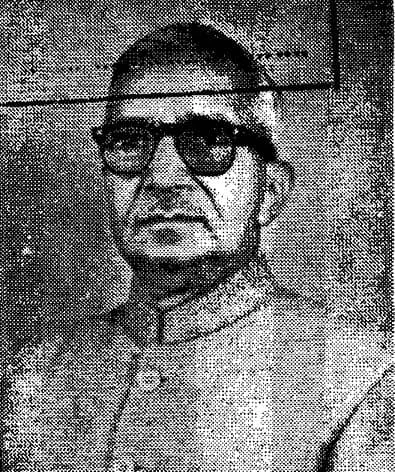
Luckily, he came to Lucknow to attend the annual convention of Authors’ Guild of India, held here from 22 to 24 March 1985 and left a significant impression on its deliberations. Moreover, he, along with a common friend, Shri K.C. Sonrexa, was kind enough to come to my place and give the pleasure of meeting him personally. I was not a little surprised to see that he was true to his image I had formed of him in my mind by reading his book and his epistles. It was a very happy homely meeting and left me with a longing to enjoy his company again and again.
The poet Longfellow once observed, ‘in character, in manner, in style, in all things, the supreme excellence is simplicity’ and, this description fits Nagaraja Raoji admirably well. Notwithstanding his lifelong service to the cause of literature, his numerous outstanding achievements in the academic sphere, his organizing capacity, and his sincere devotion to his work, his all-round simplicity and modesty stand out. As a writer with mission, he is naturally a peddler and purveyor of ideas: but he is not an ideologue. Whatever little I have known about him, I am extremely impressed by his sincerity, simplicity and ennobling thinking. In fact, ideas are intangible forces which has more power than the physical brain that give birth to them. Shri Nagaraja Rao has been providing his readers with such healthy ideas as they may elevate them morally, intellectually and culturally. Without right thinking such noble ideas cannot germinate. A man is what he thinks about all day along said Emerson: and to me, it seems, our friend thinks a lot of good things. Goodness and Godliness go hand in hand.
Shri Nagaraja Raoji appears to be basically a good man and, therefore, a happy man. I feel genuinely proud that he calls me a friend. On this happy occasion of his Seventieth Birth Anniversary Celebration due to fall on 12 June 1985, I extend my heartiest felicitations to the first rank Indian Literateur, and wish him many more years of happy healthy and purposeful existence.
(Shri Jyoti Prasad Jain is a retired professor of History. This 80 year grand old man from Lucknow has been Conferred with the title ‘Itihasa Manishi’)
Pothukuthi Suryanarayana Murthi
Advocate from Rajahmandry & secretary of All India Telugu Writers ConferencePothukuthi Suryanarayana Murthi describes C.K. Nagaraja Rao as "an outstanding man of letters."
Mr. C.K. Nagaraja Rao has been in the field of letters for nearly half a century, embellishing Kannada literature in various genres with his distinguished Contributions of lasting and abiding value. His Magnum Opus ”Pattamahadevi Shantaladevi”, a historical novel of great range and amplitude of variegated excellences and literary merits, has won for him a permanent place in the pantheon of Kannada Literature and a much-cherished niche to the hearts of millions of readers. His dynamism as an organizer of literary and dramatic Conferences, assembling Writers, producing plays (being a Playwright himself), enthusing Youth and encouraging their talents is noteworthy and his dedication to the tasks chosen by him, which is sincere and sustained, is exemplary.
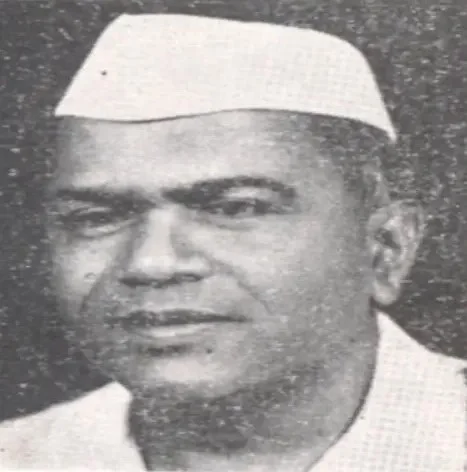
He does things in an unostentatious but impressive manner, speaks in soft and subdued tones ringing of conviction and persuasiveness, sweet reasonableness and laudable grace, and the results he has achieved are spectacular over the years. As a devout and well- meaning friend of our Telugu Writers for a long time now, Sri Nagaraja Rao has been. with great affection and good will, gracing all the biennial Meets of our All India Telugu Writers Conference since its inception in 1960 and was largely instrumental in making the Conference held in Bangalore in 1974 a splendid success. He has been our friend, Philosopher and guide in matters literary and other, and a fine builder between Telugu and Kannada Writers. His
unobtrusive but effective efforts for integration of literary men and women in different regions of the country speak eloquently of the good-will and respect he commands and the unqualified and uniform affection he enjoys among the litterateurs. The suavity of his manners, the perseverance he manifests in getting things done according to Plan and schedule, the systematic style of his functioning in literary meets, are praise-worthy and all the fifty years of his active association with and promotion of literary personages and projects, Conferences and Conventions, are studded with examples of his Sterling qualities and commandable achievements.
Mr. Nagaraja Rao’s versatility as creative writer and critic, as experimenter and exponent in the estate of dramaturgy and stage production, as an enthusiastic excursionist into the field of films, and as a promoter and organizer of literary meets and getting together men of letters’ is well known and in this respect few could equal and none surpass him. The refinement and taste he brings into bear on the performance of any task he undertakes bespeak his ingrained culture and aesthetic sensibility of a high order. He is never shoddy or perfunctory in taking decisions or doing things but always thoughtful, steady and sure in his deeds and dealings with people.
Personally speaking, I would like to maintain his winsome qualities as a hospitable host, as a sincere friend, as a literary artist of high merit who wears his learning and attainments lightly and who strives with stupendous zeal and solicitude for the desirable integration of Writers, setting an example to the younger generation in the matter of sustained good work for progress of literature in all its forms. I pray the Almighty to bestow on Mr. Nagaraja Rao His Choicest blessings for his continued consecrated service to the cause of letters and the arts, and for the fulfillment of all that he holds dearest to his heart.
(Sri. Suryanarayana Murthi is an advocate from Rajahmandry (Andhra Pradesh) and is a Correspondent of the Hindu. He is the secretary of All India Telugu Writers Conference)
K.S. RANGAPPA
Former Editor of Yojana & Writer"K.S. Rangappa refers to C.K. Nagaraja Rao as "The Ways of Pioneers."
Noble Laureate, the late Sri C.V. Raman used to tell us, researchers, that it is neither wise nor fruitful to sit down and wade through all the scientific work that has been earlier done by your chosen problem. Firstly because it would, more often than not, sidetrack, if not totally erase, your own original approach to its solution and kill your initiative. Secondly, hunting down the tomes and reading them up would be so much waste of precious time. The intelligent seeker would therefore dig up just enough to help him strike out a new path and to make sure that he was not re-inventing the wheel. We know how successfully Raman followed this dictum in his own brilliant center. The problems he chose for investigation, be it the Vibrations of Violin Strings, or the Analysis of the sounds of the tabala, or the phenomenon of Scattering of Light which fetched him the Nobel award, were as pioneering as the discoveries he made were strikingly original.

And it is also worth reminding ourselves that Raman was an “outsider” to the mystic discipline of Scientific Research. He strayed into it compulsively from a lucrative, prestigious Accounts career in the Central Government to a half-paid Varsity research assignment and teaching.
What goes for the ways of a pioneer in silence holds no less, I believe, for literature. For, I am convinced too much of a formal education, or too much of erudition, often stifles the fruitful spirit of questioning and inquiry. How often we come across Mahopadhyayas reeling of quotations right, left and centre, at the drop of a hat! you are certainly awed by the scholarship and the feats of memory. But what both the pandit and the audience usually miss is the fact that the savant is so occupied with counting other people’s coins that he has lost his own bent for minting his own.
There is I feel much truth in the legendary lives of Kalidasa, an “unlettered” shepherd boy, and of the classic genius who knew little Greek and less Latin – Shakespeare. Coming nearer to our own times, George Bernard Shaw was frankly happy he escaped the portals of a Varsity which successfully casts genius into hackneyed moulds. I have a shrewd suspicion that C.K.N. is one of the few who have been spared the smoothening hand of formal college. Like the late D.V.G., he was left free to select, experiment, reject, and finally opt for creativity in fields he found himself delightfully prolific.
I have always admired the courage and cool determination with which C.K.N. fought the odds our conservative society is so good at raising in the path of pioneers. The secret of the undaunted labours of C.K.N. is not merely the irrepressible urge of endowed talent to express itself, to communicate and share the joys of creation but, first and foremost, the supreme satisfaction that a creator bestows on the author. The true artist always plays to please himself, and is therefore ever seeking perfection. All other rewards are bonuses.
The success and recognition that have at last caught up with C.K.N. is a matter of deep gratification to all who believed him. The immortal image and glorious vision that Nagaraja Rao has wrought of Shanthaladevi with meticulous authenticity and almost religious dedication are lasting contributions to the history and literature of Karnataka. It is my fervent hope and prayer that this seventieth anniversary celebration of C.K.N. may be the fore-runner of an event more fruitful Centenary Celebrations. If I live to see it, I shall not be surprised.
(Shri Rangappa is former editor of Yojana, A Play writer and a writer of distinction)
R.V. MURTHY
Former Editor of Commerce"R.V. Murthy acknowledges C.K. Nagaraja Rao as his student."
It is a great pleasure to learn that Shri C.K. Nagaraja Rao’s Magnum Opus-Pattamahadevi Shantaladevi has earned the very first award entitled Moorthidevi Sahitya Puraskara, the lateset off spring of Bharatiya Jnanapith. I am extremely happy to read the latest issue of the Bhavan’s Journal(P.75) that the Bangalore Kendra of the Bharatiya Vidya Bhavan arranged a new discussion programme of recent Kannada Publications and that ‘Shantaladevi’ happens to have been the first of the publications to be discussed by such eminent speakers as Smt. H.S. Parvati and Shri. Hariharapriya.I can well imagine what they must have discussed, for I have read the book and enjoyed it thoroughly. So pleased my wife was after reading the book that copies of the book have been sent to all my five children in the United States. The Atlanta Kannada Sangha has been among the Kannada organizations which have bought copies.
The enormous research that has gone into the production of the Kannada work should be obvious even to a casual reader let alone constructive critic.
Shri Shriyans Prasad Jain, who happened to have known this work from me wanted it to be translated at the earliest into Hindi and I have no doubt that the Hindi version also has come out to give the Hindi Literary enthusiasts a historical novel of repute.
It is difficult to believe that, nearly 57 years ago, Sri Nagaraja Rao happened to have been a student of mine at Chikkaballapura High School, which has the distinction of producing SIR (DR) Mokshagundum Visweshwaraiaya. Although Shri C.K. Nagaraja Rao, as far as my memory serves me, he did not seem to be an outstanding student then, I well recall he was among the most studious and very well behaved pupil of the class. Brief and to point, it is note worthy he was ever cheerful. And quite unlike his talented younger brother he remains unruffled always. During all these years that I have known him, I have not seen him loose his temper even once.
A notable character of Shri C.K. Nagaraja Rao is the respect he shows to elders. Even to this day he calls me his former teacher and respects me as such.
His organizing ability is to be seen to be believed. Until a few years ago, I did not know that he possessed such ability and that in various fields-Dramatic, Literary and Culture. Let me confess I owe most of my knowledge of Shri Nagaraja Rao to his younger brother Vainika Vidwan C.K. Shankaranarayana Rao, who is justly proud of his brother and his achievements. Indeed one of the greatest good fortunes of Shri Nagaraja Rao I feel is his caring and cooperative family. There is an abundant flow of love in the family.
I know how well connected Shri Nagaraja Rao is (his maternal uncle is our beloved Nittoor Srinivasa Rao, a true and genuine Gandhian. If there is one at all). But not once has he boasted of this. In fact it was from his brother that I came to know about it.
Although I happen to be a student of Literature (English) I am not so well conversant with Kannada Literature and the contribution of Shri Nagaraja Rao to it. But I am aware he has established himself, after having patiently laboured and waited for long time though, he will always be remembered for his immortal ‘Shantaladevi’.
As a senior (in age atleast) let me exercise my privilege of wishing him many many years of service to the Language, to the Community and to the Country.
(Mr. R.V Murthy of Bombay is the former Editor of Commerce)
V.P. JAIN
HOD of Sanskrit Pali and Prakrit"V.P. Jain remarks on C.K. Nagaraja Rao as the author and his creations, particularly 'Pattamahadevi Shantaladevi'."
It was one fine bright morning in the month of March 1981, at the holy foothills of Vindhyagiri at Shravanabelgola, that I had the first meeting with Nagaraja Rao. The work had overwhelmed me so completely and aroused such keen interest in me about the author that I was eagerly looking forward to meeting him personally and talk on the various issues raised and discussed in his epic-creation Shantala and there we were face to face with each other, a unique moment in my life like having the first glimpses of the collossus of Bahubali; one and Nagaraja Rao : the man who had brought into time light the life and history of a dynasty and a queen who could well be called the the Joan of Arc of Karnataka in the 11th Century A.D.
Nagaraja Rao came to Shravanabelgola as the leader of a group of journalists/correspondants to cover the rare and ever unforgettable event of Bahubali Sahasrabdimastakabhisheka celebrations for the national press. The first rays of the sun were glowing on the hilltops. I was awe-struck by his tall and towering personality. The man just in front of my eyes so great and yet so simple, so modest and so deeply affectionate as if we were age old intimate friends. His face flowing with great charm and smile - which seemed to reflect as it were, the openness, the nobility and the largeness of his heart and soul. To me he appeared as an embodiment of all the human qualities and virtues he has attributed to his characters in Shantala. His service of fun and Humour and bursts of laughter break at once all human barriers and make one feel instantaneously one with him besides the feeling of all encompassing love that his person exhuberates with such intensity.
The keenness of his eyes, the depth and clarity of his remakes, strewn with his deep knowledge and understanding of the centuries of history in his spontaneous effort to make us aware of the sanctity and historicity of the place, would keep us looking at him in such rapt-attention, as if one whole conscious being was taken captive by him.
Fortunately enough he once took me to his happy and prosperous family, where four generations of them are living together under one roof, heart and home. His large and joint family is indeed the model of a traditional, religious, orthodox and yet so secular, noble and large hearted as a truly sacred Brahmin family of the vedic-ages. It was an exhilarating and ennobling experience to be with his family.
Karnataka has for the past twenty five centuries, almost since the days of Mahavira continued to be the centre of the Jain tradition and culture in diverse fields and forms, e.g. a prosperous Jaina-community and highly revered Jaina saints, unique literary and philosophical works by Jainacharyas, Jaina art and Architecture, role of Jainas in the administration and politics of Karnataka, their deep influence and the place of high honour, prestiage and position during the rule of the Rashtrakutas, the Hoyasalas, the Chalukyas and Gangas for several centuries in and around Karnataka in the middle ages. The rulers of different dynasties did fight among themselves for the aggrandisement of their dynastic pride and ambitions: but seldom did anyone of them harm the Jaina-community, infringe their freedom of desecrate their religious historical places and monuments. The religious, cultural and literary activities of the Jainacharyas and laity were always protected and justly patronized.
Shri Nagaraja Rao, the author of Shantala was born in this historical background severty years past from now. Pattamahadevi Shantala is the outcome of the author’s 50 years of active life as a playwright, dramatist, performer, stage-actor, director and journalist and to cap it all as a serious researcher of history
for 25 years as an untiring seeker of truth, supplemented with decades of accrulated vast and vivid experience of life and society.
The writer of this article is neither a literateur nor a literary-critic. Therefore whatever is stated below are the stray ramblings and reflections of an inquisitive reader of Indian Literature.
While going through the pages of Shantala all over again my sub-conscious developed a strange sense of peeping through the episodes of Mahabharata, the eternal epic. Numerous episodes and happenings narrated in Shantala resemble those of the Mahabharata. Right since the childhood, growth and upbringing of Shantala in an ordinary Heggade family, upto her being anointed as the Pattamahadevi of her husband Hoyasala Emperor Vishnuvardhana 2nd (1108-1141 A.D.): renunciation of worldly life as a Jain Sadhvi in the old age and finally ultimate journey to the heavens by relinquishing all food and drinks (Sallekhana), practice of severe austerities and penances according to Jaina-religious tenets, the story of Shantala, a historical novel, without distorting the facts, is not the story of just one or few important individuals and dynasties, but that of the beginnings, the growth, expansion and decency and disintegration of a whole range of imperial dynasties, empires and kingdoms, and the art, architecture, religion and culture in and around Karnataka in the 11th and 12th centuries A.D.
The education and training of Shantala in the Heggade family, the mother a devout Jaina and the father an orthodox Shaiva, their coming into closer contacts with the Hoyasala Royal family, affairs of the state and palace, intrigues for gaining regal status and importance through marital relations, conspiracies and efforts of the enemies of Hoyasalas and disgruntled individuals, the personalities of the teachers: poets Nagachandra and Boki-Mayya, poetess Kantidevi and the master architect and craftsman of Parasanatha Basadi, the depth, width and secularity of their knowledge and attitudes ventilated through discussions for the benefit of their pupils the 3 Poyasala princes, Shantala and the 3 daughters (the would be queens of Prince Ballala) of the General of Hoyasala Armies, the extremely magnanimous and compassionate characters of princess Echaladevi, Prince Ereyanga and his father King Vikramadithya, lives of Hoyasala King Ballala, Emperor Vishnuvardhana 2nd (1106-1147 A.D.) and prince Udayadithya, the loyalty of General Mariyanna and Pradhana-Amathya Gangaraja, the characters of Revimayya and Chattala, each one of the personalities and characters shine out in glory in their individual and functional dignity.
Revimayya the chief personal attendant and guard of the Hoyasala family for 3 generations stands out as an embodiment of pure love, affection, kindness, loyalty, dexterity, cleverness, faithfulness and dutifulness with rare devotion, alert, courage and firmness. His presence in the novel and the way he expresses his innermost feelings, sentiments and emotions of deep rooted affection in him, makes streams of tears flow in an ecstatic pleasure and the reader is, as it were spiritually transported to 11th century, Karnataka in the presence of Revimayya.
The character of Chattala is especially remarkable not for her unique sacrifices alone, but also for the exceptional courage, intelligence, boldness, alertness and tiger-like swiftness of her actions that are displayed in scores of highly dangerous and murderous situations for the safety, security and defense of the life of Hoyasala Princes and the Hoyasala Kingdom, are things that any society in any age or country would be proud of.
The whole being of Chattala, the defense of her personal dignity and character and the pride of position granted to her by Shantala inspite of what had happened to her person, give rise to very important fundamental questions and basic issues about ethics and morality. After all what’s the true test of the purity of a woman’s character? Is the body and no soul the whole woman? The bodily chastity purity the whole thing? The complete final and irrevocable test? Wasn’t Amrapali forced to accept prostitution even while still a child? Why was Sita forced to pass through the trial of blazing fire and still again abandoned in the terrible forest? What was the fault of Kalidasa Shankuntala to be publicly abused in Dushyantas court? Why was it necessary to put on stake the person of Draupadi in the game of dice; heap on her the unthinkable public insult, disgrace and ignoring in the court of Duryodhana in the presence of all the heroes of Mahabharata? Why had Ahalya to suffer the curse of conversion into stonehood? And what was the retribution if any, meted out to Indra born to be wronged the way they were? For what sin of theirs? In our highly advanced scientific and technological civilizations of today, thousands of child, young and grownup female get raped every hour? So, are the Victims to be blamed and punished for the horrible crime against their person? No and Never. This No, had been resounding, and re-echoing in the consciousness of Shudraka, the author of Mrichhakatikam, who created Vasanthasena of Bhavabhuti and Goswami Tulisidasa etc. who could not bear the idea of Sita’s second banishment to the forests. The honour of women has been held high and lofty again in the writings of many of our illustrious modern Indian writers. And that is what Pattamahadevi Shantala did by granting the place of trust, honour, respect and position to Chattala, who proved worthy of her metal, of the faith put in her on every occasion and in any situation that confronted her.
There is nothing to compare the life and character of Shantala, the Laxmi Bai, Durga and name any great lady in human history that she was not, very rightly therefore the epic-novel has been named after her. Shantala’s mother and herself a devout Jaina, father an orthodox Shaiva, husband Hoyasala emperor Vishnuvardhana 2nd, a convert Vaishnava, the three royal family Guru’s, Kavi Nagachandra and Bokimayya and the Poetess Kanti Devi, the free discussions among the teachers and disciples, numerous other important characters, the life of the common pupils, the reverence paid to Gods of different religious faiths and construction of temples, for them religious ceremonies and festivals celebrated are glorious examples of the true secularity, freedom and nobility of the religious attitudes, life and faith of the people of 11th and 12th century Karnataka.
We have been crying hoarse for the past 37 years of Indian Independence for national integration and ideals of secularism. But we have done little for making the people and ourselves understand the best in each religion at any level in our public or private life without which no talk of secularism and national-integration can make any sense or becomes simply nonsense. Works like Shantala in the popular literary medium of novels, stories and poetries in all the 15 national languages, dialects and sub-dialiects could go a long way in achieving the desired objective.
The knowledge and experience of five decades of the author, his deep understanding of human nature, sentiments and psychology, his craftsmanship as architect of literary edifice, his mastery of the language, style and narration on matters of art and architecture, Astrology and Astronomy, Ayurveda, education and culture, history, religion and philosophy, military organization and operation, policy and diplomacy are exhibited at each step from the first to the last episode in Shantala and the novel stands out as a compendium for Karnataka during the middle ages of the Christian Era.
(Shri V.P. Jain is Professor and head of the Department of Sanskrit Pali and Prakrit, R.D. Vishwa Vidyalaya, Jabalpore)
H.S. KUMARA SWAMY
Occupation"H.S. Kumara Swamy Regards C.K.N. as 'My Guru'"
In the year 1974, I came cross Adarsha Film Institute in Bangalore which was then basically meant to train and reorient talented dramatists to Film Acting. As I was very much interested in music and drama right from my childhood, and as I used to take an active part in this art. I aspired to improve my acting talent and, therefore, sought admission at this Institute. The father of Kannada Film Industry, Late Shri R.N. Nagendra Rao was the Principal of this institute and Shri C.K. Nagaraja Rao was the Vice Principal, while Ku. Ra. See. Rajan, Nagendra and others were oon the faculty. My experience with this Institute and interaction with all above stalwarts are noteworthy. In particular, my closest interaction had been with CKN, my Guru.
My selection to this Institute was quite eventful and unforgettable. At the selection interview, I was asked to enact a scene from a script with only expressions and no dialogues. I was also asked to read the script with correct pronounciations and punctuations, but no action. After my attempts to do what I was asked to do, I realized that I knew very little of Acting. I sat down speechless and dissatisfied. That was when a few sweet words of C.K.N. touched my heart and gave me rays of new hope and sense of direction. I got the strength to bear the feeling of shallowness and to acquire the depths uncovered. He was able to communicate to me a new wave of self-confidence, encouragement, and reassurance to fulfill the desire to excel in the field. I valued this aspect most as it is very essential and an important prerequisite for a teacher. A teacher, in my opinion, should be an effective communicator of feelings, expressions and words in dissemination of knowledge.
When I was actually called to join the Institute, I was overjoyed. From then onwards, I used to meet CKN almost everyday for long hours of discussion. He taught me theory, diction and acting for one year. It was a real experience. I fell short of words to write the indepth knowledge he has on the subject and his inimitable style to communicate each word filled with right feelings that transform you into a different world of imagination. His analysis of a situation or a complicated subject is very picturesque. The examples he used to cite or drive home a point on the subject were full of experience, highly imaginative and would see new dimensions to the subject matter that was being dealt with. I can never forget the hours we have spent with him in dealing with a subject of this nature with such a vast amount of segments and diversities. He used to handle them all with care, delicacy and clarity. The deep and firm impressions he has imbibed in me are unerasable and everlasting.
During the course he made us practice a drama. Here, I felt a great difference in his way of approach to convince that each and every role in a drama is equally important no matter how long or short the role is. The prime requirement for the success of a play is that every role should be live and effective. He also taught awareness and importance of diction in a play. To me rhythm was something associated only with music till such time when CKN spent hours on the subject to emphasize how it plays a vital role in a play as well.
In CKN, I find a perfect and distinctly different blend of vast experience of stage art, literature, history, fine arts and culture. To me he is a picture of patience and a symbol of peace. CKN is a legend in himself. He does not speak about his knowledge and one has to be in close association with him to experience his pleasing personality to acquire the treasure of his knowledge. However, any length of association with him is insufficient to share the vastness of his knowledge and experience. He is still young, effective and forceful in his communication of the multifarious areas of art and literature.
I am one of the thousands of his admirers of his creative work ‘PATTAMAHADEVI SHANTALA” which bagged the prestigious Bharatiya Jnanapith “MOORTHIDEVI SAHITYA PURASKARA” award in 1983. I am very sure that his creative works brought out so far will be of everlasting value and useful to mankind.
I take this opportunity to invoke the Almighty to give my guru CKN, unlimited strength and longevity, to bring out many more such works on Indian History, culture and Theatre art, so that mankind at large will be benefitted for many more years to come.
I am highly thankful for giving me this opportunity to express a few words about Shri. C.K. Nagaraja Rao. I wish him all the best and great success.
S. Ananthanarayana
Occupation"S. Ananthanarayana's Insights on C.K. Nagaraja Rao's Novel 'Pattamahadevi Shantaladevi'"
The novel is commonly called an epic in prose. But there are certain novels which are really epic in scale as they are written on a vast canvas and astound us with their depth and variety. These Novels could be called epic Novels - Tolstoy’s War and Peace, Romain Rolland’s Jean Christopher and Hugo’s Les Miserables belong to this group. Of the Historical Novels only ‘War and Peace’, John Dos Passos’ U.S.A. and Sholokhov’s Trilogy on the Don can claim to be epic novels. Of the novels in Kannada, only a few can lay claim to the name of Historical novels. Many of them are ‘historical romances’ like the novels of Sir Walter Scott - Historical only in name but really ‘romances’. Sri C.K. Nagaraja Rao’s novel stands apart in this - that it has the authentic quality of a historical novel. The period chosen is an era of cultural glory in the history of Karnataka.
The Hoyasala empire had reached its acme in its military glory when the period’s art flowered in the Belur, Halebid and Melkote temples. Based on his research into the history of the Hoyasalas, Sri C.K.N. Rao has created a novel which breathes the very atmosphere of the era of Shantala and Vishnuvardhana. Scraps of information from the available historical sources both published and unpublished pieces of literature lying hidden in village houses gave him sparse material. Then there are the main sources of our history - the stone edicts - the Shasanas that were carved on stone speaking of a legacy given to some benefactor of the time, inscriptions on stone or copper, memorial stones(viragals) for heroes or a copper plate announcing an offering to some temple or to some respected person and some palm leaf writings guarded as family heirlooms in some house whose ancestor was the beneficiary, some mutilated piece of stone abandoned as useless – These were meticulously studied and researched by Sri Rao for the work. The mammoth study has produced a worthy mammoth novel which can stand by the side of any great historical novel in any language. The living monuments of the Shantala Era – the Belur and the Halebid temple complexes by themselves would be an inspiration. Study of the era and an aesthetic appreciation of the art have blended harmoniously in this novel, authentic historically, great in its execution, epic in its proportion and vivid in its portraiture of every aspect of that life of the period.
The vast canvas on which Sri Rao has embarked upon has a span of three generations of Kings of the Hoysala Dynasty, during which the empire was built and expanded. The period becomes the background to the life of Shantala – right from her birth, to the time of her Sallekhana – the penance of death, it is a story full of the pranks of childhood, the serious study of the arts, the deep devotion to music and dance, the stupendous tasks of ruling an empire, the intrigues of the court and especially of the near Kin of the Emperor, the personal loyalties and treacheries, religious tolerance and threatened conspiracy in the garb of religion – the turbulence of wars against enemies and against friends turned enemies – the construction of the monumental temples at Belur and Halebid with their exquisite filigree work – the rivalries of the Queens wrenching the heartstrings of the palace and the people – all these are vividly pictured in all the variety of colour and detail – a story of a nation with the character of the majesty and the glory of the nation – Shantaladevi at the hub of the action. Her every action – personal, family or public is presented like an exquisite piece of mosaic – each blending into the other to create a magnificent image. As a connoisseur of art, as a practitioner of the art of Dance, as the humble daughter of a chieftain rising to become the First Queen, the Anointed Queen (Pattamahadevi) by virtue of her gentleness and merit, as the Queen with the other consorts of King, patient and wise in her dispensation to them, thus keeping them happily satisfied, as a patron of the arts – inspiring the artists to their great heights of creativity in temple architecture and dance images, helping the poor, tutoring the secret agents to spy on the enemies, welcoming the guests to the palace with due affection and respect – encouraging the various religions with equal enthusiasm and tolerance, inspiring confidence and love among the people at large and her personal servants – Shantala rides like a colossal figure in the novel. Her figure certainly dominates the canvas.
The authenticity of the novel can hardly be stressed. The wars are described so vividly with reference to the forts, the formations of the armies, the conventions followed by the opposing armies, the camp-life of the Kings and the Commanders – and the final assaults that it appears as if the war is taking place before your eyes. The intrigues of the court based on personal whims and prejudices and selfish tricks are all clearly etched – even to the smallest detail of how they affect the conduct of the war far away as well as the peace at home.
Similarly the creation of the temples of Belur and Halebid with their artistic glory is presented with the Sculptor Master’s unconventional character – his personal tragedy flowering in the artist’s glory. So also the revelation of his identity and the fulfilment of his son’s search for the father and the reconciliation are all so tenderly pictured by the novelist Rao. There are a hundred and twenty characters drawn from the ordinary people, the Chieftains, the soldiers, the commanders of the armies, the local commanders, the teacher of music, dance and literature, the secret agents with fear in their hearts and risking their lives in their loyalty to the throne, the King, his children, his sister and her family, the tolerant religious Master, his treacherous pupils with their fanaticism, the priests of different religions but following one human approach to the divine, the artisans, the Queens and their selfish mothers – Each one of the characters is different but real. They are alive – very much alive to us. We seem to live through the period with all the artistic glory and turbulence. No praise would be greater to the Novel – than to say that it stands as an artistic achievement almost on par with the great historical novel – Tolstoy’s War and Peace. It is in one word, a great contribution - a glorious and vivid art – to the realm of world literature.
K C Sonrexa
Hindi Writer, Philosopher"K C Sonrexa Hails CK Nagaraja Rao as 'A Diamond Cut' in Literature!"
Unless you fall sick, you are not conscious of the various parts of your body and their functioning. The awareness comes with pain, sometimes with pleasure also of a kind. The situation has to be particular to create living consciousness.And that consciousness is largely of the self, or in any case converging toward it; that is, it is wholly personal. You are also very personal about your own people: kith and kin and close friends. They are like limbs of your organism. You suddenly discover or realize them when they depart from you temporarily or permanently or when they occasion some joy: say some success; birth of a child or wedding (if it is a runaway affair, then within comes to fore an anguish.)
Again, for persons of creative kind, the process of realization of your own is much the same. If he is making a picture or carving a sculpture; writing a novel or short story; doing a feature or play; singing a lyric or simmering a limerick about his near and dear, he will have to detach himself to have a perspective to become impersonal to allow creation. And this is a painful joy. Ask any mother.
I never thought of Nagaraja as the ‘other’ person in my life. He has been an integral part of my own and my family’s living system. He living far away in fact and naturally made him closer to us. We were longest together during the making of the film AKKAMAHADEVI in Kannada in Kolhapur, Maharashtra in the Studios of the Shalini Cinetone. For long spells we did nit communicate with each other even by post. But there have been times we exchanged letters like made lovers.
At no time there has been distance between us to lend enchantment to Nagaraja. To regain that distance a situation arose to make me aware of Nagaraja; announcement on National Television of Jnanapith’s Moortidevi Award to him for his magnum opus PATTAMAHADEVI SHANTALADEVI in Kannada. Nagaraja or any other writer must have related the story of the creation and publication of this monumental historical novel elsewhere in this volume. Nagaraja was then abroad touring Europe by bus together with his wife and he was lucky to receive the news there as well as felicitations from fellow travellers of various countries of the world.
The news, however, made me sad. It was like still birth to a mother. Because of the magnificence of SHANTALA as a piece of creative writing on a true historical subject, I had been expecting the Jnanapith Award itself and not a 80% less newly created subsidiary of it to commemorate the memory of a kin of the founder’s family. I have always been sceptic of all awards, small and big. Even the Nobel Prize has not always been above subsidiary non-literary or non-scientific considerations. Jean Paul Sartre said so while declining to accept this most coveted prize of the world. I expected Nagaraja will refuse to accept the Moortidevi Award. But did not. I had shared his pleasure of the ceremony in New Delhi earlier this year.
Like all creative creatures of the lower middle class like us, Nagaraja had his own compulsions for accepting the award. For it was for the first time in his long life of creative and financial struggles that recognition came to him with fanfare on even the national media which was the only good of this felicitation volume.
There is little dichotomy between Nagaraja as a great writer and great human being. Most creative writers and artists have a split personality. I know most of the Indian writers of all the languages of the country, because I have portrayed them. So, I can say so with authority about Nagaraja, which is to say a lot, for the function of all art and literature is to make better human beings to progress human society towards stateless and classless utopia, a Ramrajya, that is yet to be realized since Rama himself failed to establish it during his own reign.
Both as human being and a literary artist C.K. Nagaraja Rao is a diamond-cut. His Pattamahadevi Shantaladevi is an ode to immortality in Indian Literatures.
Houston, USA, Oct. 28, 1985
(K C Sonrexa is a Hindi Writer of distinction. He is also famous portrait philosopher of our country)
M.V. Kamath
Journalist"M.V. Kamath Praises C.K. Nagaraja Rao’s Dedication and Literary Excellence!"
I cannot say, with any degree of conviction, that I know Shri. C.K. Nagaraja Rao well. One says that of a friendship of many years’ standing. I chanced to get to know him because he was gracious enough to call on me when I was editor of the lllustrated Weekly of India. He had just written his monumental novel Pattamahadevi Shantaladevi which ran into 2,160 pages and wanted to know whether it could be reviewed in the Weekly’s pages. I was embarrassed to say that I could not. The weekly had set a policy long before I became its editor that Indian language publications should not be reviewed in detail for two reasons: One, that a book in any one language would appeal to only one section of the public and two, that if we started the trend we would soon be inundated with books from the other languages failing to review which we would be accused of bias.
I think the previous editiors came to that decision from bitter experience. There is a lot of inter-lingual jealousy and I did not want to be the cause of gossip. But two things impressed me most about Mr. Nagaraja Rao. First, his modesty. Here was an author who had spent years of detailed study and research in his single minded pursuit of a great idea and yet was most reluctant to speak about himself. About his subject and how he handled it, he was most willing: obviously it meant a great deal to him and he had been totally immersed in his subject. The second thing which touched me most was the understanding he showed about my predicament. Lesser authors have taken my time to insist why their books should get reviewed but while Nagaraja Rao was disappointed and I could see it on his face. I got the impression that he understood and that by itself was reward enough to me. He was gracious enough to say that if ever I came to Bangalore, he would be happy to receive me in his home and I accepted the offer gladly. In due course I had the pleasure and honour to call on him and to be introduced to other members of his remarkable family. The old world courtesy and culture of a family of deep learning never ceases to amaze me; It is an education by itself.
As a small time writer and recorder of the passing scene, I am impressed by the dedication of a writer who goes to tremendous lengths to get every detail right. We attribute this quality to German scholars but seldom realise that we, too, have such magnificient scholars who put everything, their time, money, health in the pursuit of excellence. That is why I feel honoured to associate myself with the C.K. Nagaraja Rao Seventieth Birth Anniversary Celebrations. He completes the biblical three score years and ten. It is my prayer that he will continue his studies to produce an associate volume. His life reminds me of what the great American Judge, Oliver Wendell Holmes Jr said: “Whether a man accepts from Fortune her spade and will look downward and dig or from Aspiration her axe and cord and will scale the ice, the one and only success which it is his to command is to bring to his work a mighty heart”. And that is what Nagaraja Rao has done: We bow to him in reverence.
(Shri M.V. Kamath is a respected Journalist of International standing. He is former editor of Illustrated Weekly of India)