Artist
Actor – Stage Artist: (Kaleya Kaayaka)
Director - Drama
Make-UP artist - Drama
Costume Designer - Drama
Experience in The Movie World
Theatre: Actor, Director and Visionary
The world of theatre occupied a central place in CKN's life. From an early age, he developed a deep fascination for drama after witnessing village performances, professional stage productions, Marathi plays, and mythological dramas. Gifted with a commanding stage presence, a resonant voice, exceptional language skills, and natural acting ability, he quickly emerged as a distinguished performer.
For nearly four decades, CKN remained actively involved in theatre as an actor, director, trainer, organizer, make-up artist, costume designer, and mentor. His contribution extended far beyond performance, helping shape modern Kannada theatre through innovation, discipline, and artistic excellence.
Founding of The United Artists
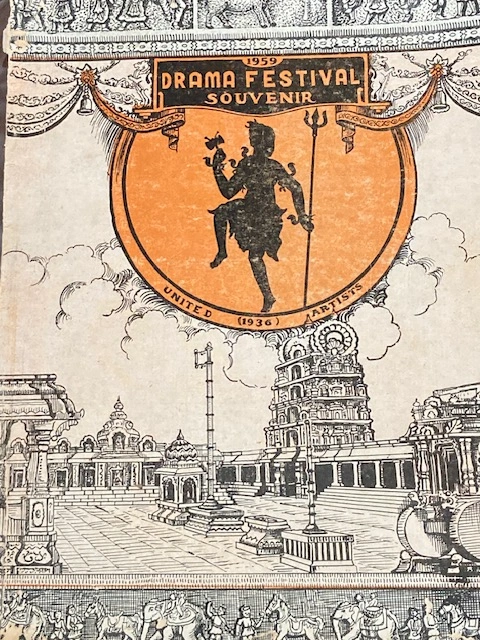
In 1936, CKN founded The United Artists, a pioneering drama troupe dedicated to experimenting with new theatrical forms and nurturing emerging talent. Serving as its Organising Secretary, he transformed the troupe into one of the most respected amateur theatre groups of its time.
Operating without a permanent office or rehearsal space, members practised in homes, parks, and public spaces, driven purely by their passion for theatre. The troupe performed across Karnataka and in cities such as Bangalore, Hubballi, Gadag, Dharwad, Chikkamagaluru, Tumakuru, Harihara, Bhadravati, Mumbai, and several others.
At a time when existing theatre organizations offered limited opportunities to newcomers, The United Artists became a platform for aspiring actors, musicians, and theatre enthusiasts. Many notable performers and cultural personalities were associated with the troupe, which became renowned for its artistic discipline and innovative productions.
Acclaimed Productions and Stage Success
Under CKN's leadership, The United Artists staged several celebrated productions, including:
Home Rulu
Nachiketa
Shudramuni
Soubhagya
Aashadabhoothi
Avanthara
Raja Kabooli
Theremareya Chitragalu
Chandragupta
Jayashree
Valmikiya Bhagya
Gadayuddha
The troupe received widespread acclaim at literary conferences, Kannada Sahitya Parishat celebrations, Congress sessions, cultural festivals, and theatre competitions.
A major milestone came in 1942 when Home Rulu won First Prize at the Karnataka State Drama Competition held in Gadag.
A Director Ahead of His Time
As a director, CKN believed that theatre should faithfully reflect the playwright's vision. He paid meticulous attention to every aspect of production, from characterization and dialogue delivery to stage design and visual composition.
His productions were known for their realism, aesthetic appeal, and immersive stage settings. Plays such as Valmikiya Bhagya, Gadayuddha, and Soubhagya earned special praise for their innovative visual presentation and dramatic impact.
CKN was also an experimental director. In 1959, he staged productions such as Nachiketha, Jayashree, Shudramuni, and Valmikiya Bhagya with different casts and interpretations, demonstrating how a single script could be approached in multiple artistic ways. He even directed Shudramuni with an all-female cast, a progressive initiative for that era.
Master of Make-Up and Costume Design
Beyond acting and directing, CKN was widely respected as one of Bangalore's finest theatre make-up artists during the 1930s.
His expertise was so highly regarded that drama companies from different towns often invited him specifically to design make-up for their productions. Theatre pamphlets would proudly announce his participation.
For CKN, make-up was not merely cosmetic; it was an extension of character creation. He believed that the audience should immediately recognize a character's personality through appearance. Whether portraying a widow, hero, villain, or comedian, the make-up and costume had to communicate the essence of the role.
Similarly, he placed great importance on costume design. Costumes, ornaments, and accessories were carefully selected to reflect the character's social status, temperament, and personality. His productions were praised for their visual authenticity and artistic attention to detail.
Contemporary reviews particularly admired the costumes, make-up, and stage design of Valmikiya Bhagya and Gadayuddha, describing them as unprecedented in Kannada theatre.
The Actor Who Lived His Roles
CKN possessed a rare ability to completely immerse himself in a character. Audiences and critics alike praised his natural acting style, emotional depth, and expressive dialogue delivery.
One incident became legendary among theatre circles. During preparations for a performance of Shamannana Sahasa, he fell from a ladder and seriously injured his leg while arranging stage settings. With no replacement available and cancellation imminent, he chose to perform despite intense pain.
Once on stage, he became so absorbed in the character that he completed the performance flawlessly, earning tremendous applause from the audience. Only after the curtain fell did the full extent of his injury become evident, requiring him to rest for an entire month.
This extraordinary dedication exemplified his lifelong commitment to theatre.
Career Achievements in Theatre
Over the course of his theatrical career, CKN:
Acted in 108 plays across Kannada, Sanskrit, Telugu, and English.
Portrayed 122 different characters in approximately 725 performances.
Directed 75 stage productions.
Performed in 27 unpublished plays before their publication.
Wrote, directed, and acted in several of his own productions.
Worked with many of Kannada's most celebrated playwrights and literary figures.
His performances as Yaksha, Chanakya, Lakshmana, Duryodhana, and numerous other characters earned widespread critical acclaim and audience admiration.
Service to Theatre Institutions
CKN's contribution extended beyond performance and production.
From 1934 to 1945, he served on the Organising Committee of the Bangalore Amateur Dramatic Association, mentoring numerous young artists.
Between 1943 and 1945, he headed the Drama Section of the Kannada Sahitya Parishat, where he staged several acclaimed social and mythological plays.
From 1970 to 1974, he served on the Advisory Committee of Ranga Mantapa, one of Bangalore's leading theatre institutions.
In 1956, he founded the Samyukta Lalitha Kala Shaale (United Fine Arts School) and served as its Founder President, promoting theatre, music, dance, cinema, and other fine arts through a structured platform.
Journey into Cinema
CKN's association with cinema began in the mid-1930s. Initially attracted by the possibilities offered by the emerging film industry, he travelled to Bombay and briefly worked as an assistant director on a Telugu film.
Although his early experiences left him disillusioned with the industry's functioning, he continued to engage with cinema in various capacities throughout his life.
He contributed stories, screenplays, dialogues, and lyrics for several films and played an important role in bridging literature and cinema.
Major Contributions
Wrote story, screenplay, dialogues, and songs for Santha Kanhopatra.
Produced Daivaleele (1962), one of Kannada cinema's earliest social films featuring a dual role concept.
Wrote dialogues for the acclaimed film Gouri (1963).
Introduced the use of renowned Kannada poets' works in cinema and helped establish the practice of paying honorariums to poets for their lyrics.
Initiated the ambitious film project Akkamahadevi, though it remained incomplete.
Wrote dialogues for Aparoopada Athithigalu.
Mentor to Future Filmmakers
From 1972 to 1977, CKN served as Founder Vice-Principal of the Adarsha Film Institute, where he trained aspiring actors, directors, cinematographers, and playback singers.
Drawing upon his extensive experience in theatre and cinema, he developed training modules, prepared syllabus/study materials, conducted practical workshops, and personally mentored students. Many future artists and filmmakers received their foundational training under his guidance.
Legacy in Performing Arts
Whether as an actor, director, producer, teacher, make-up artist, costume designer, or cultural organizer, CKN approached every artistic pursuit with unwavering dedication. His experiences in theatre profoundly influenced his literary works, enriching them with dramatic structure, vivid characterization, and powerful dialogue.
Though his contributions to theatre and cinema were immense, he never allowed these pursuits to overshadow his literary calling. Instead, each discipline enriched the other, making him one of the rare cultural figures who left a lasting mark across literature, theatre, radio, and cinema.
His work not only entertained audiences but also expanded the horizons of Kannada performing arts, ensuring his place among the significant cultural contributors of his generation.